Marriage and children
Biko married Ntsiki Mashalaba in 1970.
[16] They had two children together: Nkosinathi, born in 1971, and Samora.

He also had two children with
Dr Mamphela Ramphele, a prominent activist within the BCM: a daughter, Lerato, born in 1974, who died of pneumonia when she was only two months old, and a son,
Hlumelo, who was born in 1978, after Biko's death.
[1]

Biko also had a daughter with Lorraine Tabane, named Motlatsi, born in May 1977.
Activism
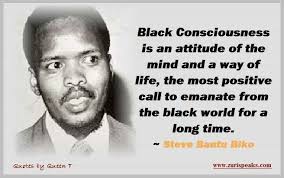 In the early 1970s, Biko became a key figure inThe Durban Moment. In 1972, he was expelled from the University of Natal because of his political activities and he became honorary president of the Black People's Convention. He was banned by the apartheid government in February 1973, meaning that he was not allowed to speak to more than one person at a time nor to speak in public, was restricted to the King William's Town magisterial district, and could not write publicly or speak with the media. It was also forbidden to quote anything he said, including speeches or simple conversations.
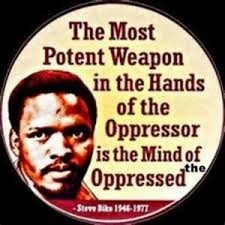
When Biko was banned, his movement within the country was restricted to the Eastern Cape, where he was born. After returning there, he formed a number of grassroots organizations based on the notion of self-reliance: Zanempilo, the Zimele Trust Fund (which helped support former political prisoners and their families), Njwaxa Leather-Works Project and the Ginsberg Education Fund.
In spite of the repression of the
apartheid government, Biko and the BCM played a significant role in organising the protests that culminated in the
Soweto Uprising of 16 June 1976. In the aftermath of the uprising, which was met with a heavy hand by the security forces, the authorities began to target Biko further.
More on Steve Biko to come >>>>>

No comments:
Post a Comment